

Kobo Daishi
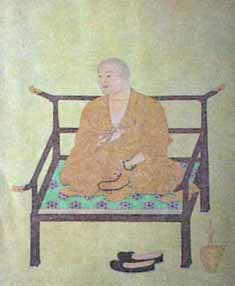
Kobo Daishi (Kōbō Daishi, 774-835, picture above), also known as Kukai (空海 Kūkai), was a famous Japanese monk who went to study in Tang China from AD 804 to 806. Kobo Daishi studied esoteric Buddhism from the successors of the Tang-dynasty monk Bu Kong.
Renshaw and Ihara refer to the story that Kobo Daishi may have misheard the Samarkand word for 'Sunday, 'Meeruu', as 'secret day', with the result that Sunday continued to be called Mitsu (meaning 'esoteric' or 'secret') for a large part of Japan's history. According to the ffortune.net site (Japanese only), the Soghdian (Samarkand) word for Sunday was actually mentioned in Bu Kong's Xiuyaojing (宿曜经). The concept of a 'secret day' was very appealing for astrological purposes.
A biography of Kobo Daishi can be found at the Reiki Foundation site, Koyasan and Shingon Esoteric Buddhism, The Ancestry and Childhood of Kukai - Kobo Daishi, Columbia Encyclopedia,and Comptons Encyclopedia. A brief note on Bu Kong and Kobo Daishi can also be found at the entry for the Forest of Steles Museum in Xi'an.